
Teaching in Monastery
Gain practical experience through guided internships in healthcare, social work, public health, and education across diverse local settings.
Full Immersion
Live and work inside a real operating monastery — not a curated experience.
English Teaching
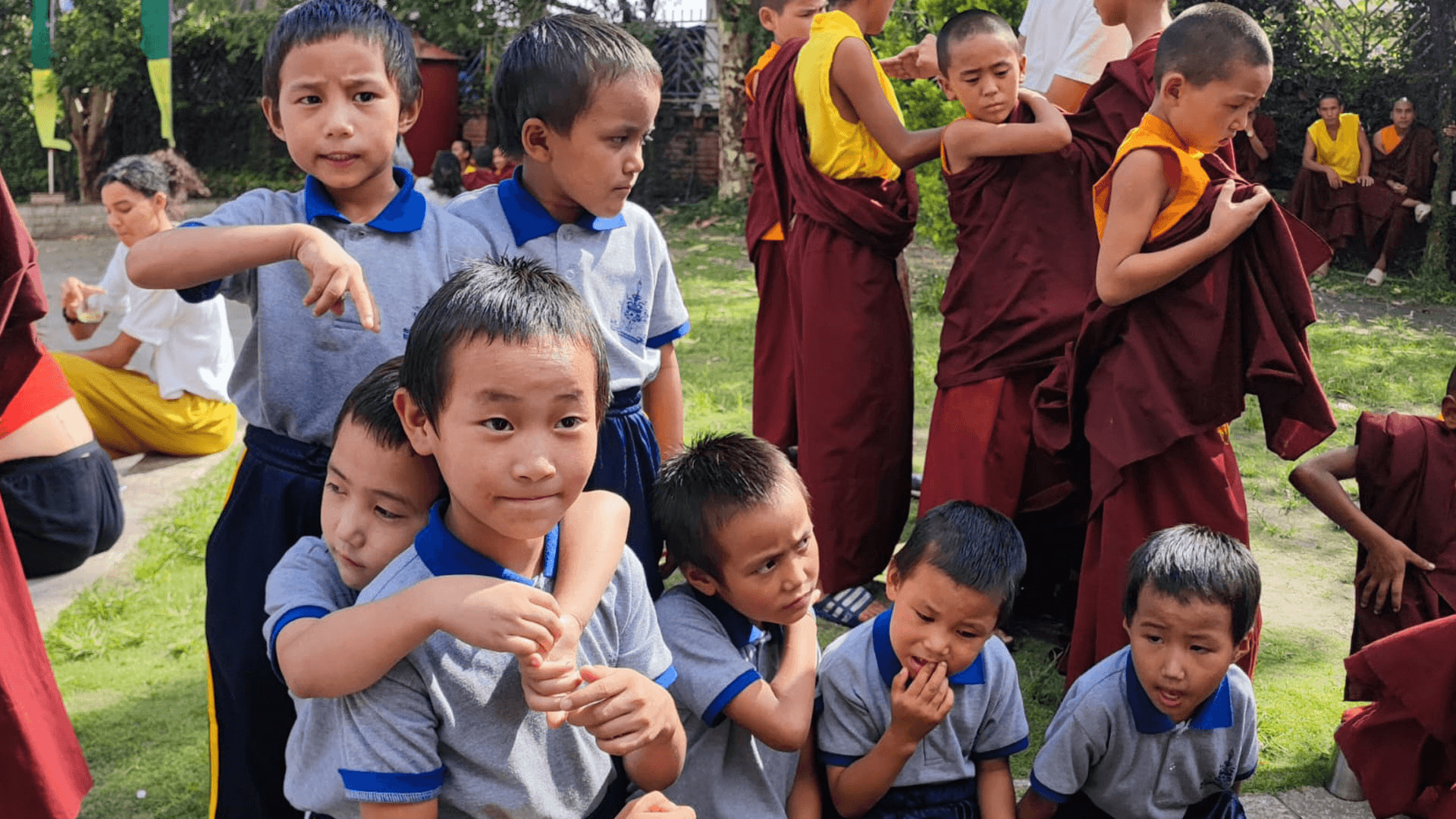
Teach conversational English to student monks aged 9 and above.
3 Locations
Kathmandu, Pokhara, and remote Himalayan placements available.
Certificate
Receive a recognised certificate of service on completion.
What is monastery teaching volunteering in Nepal?
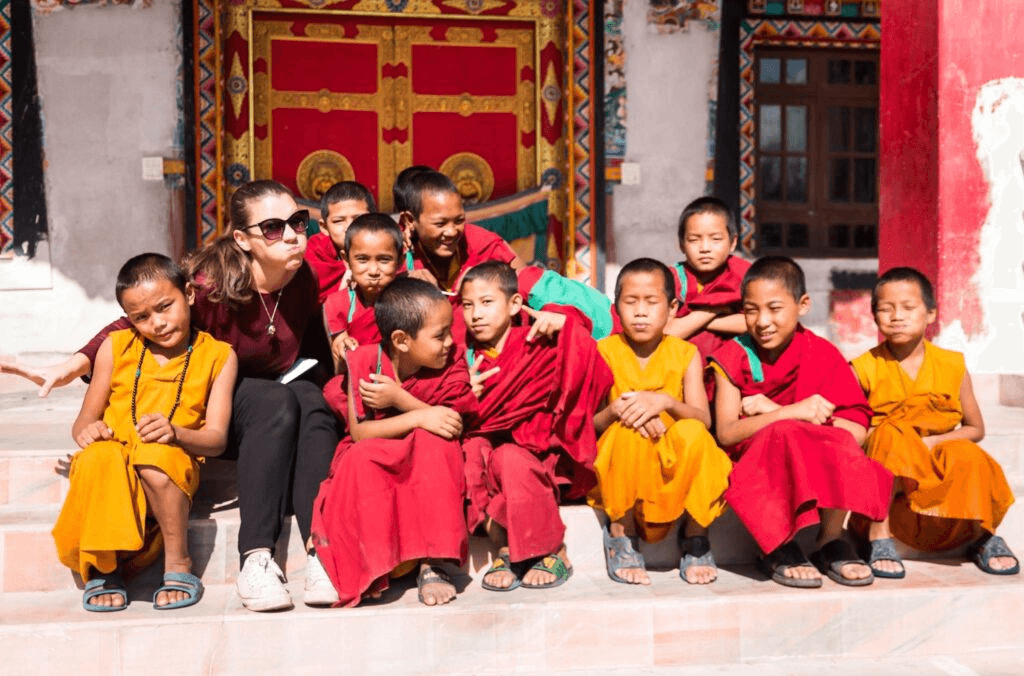
Teaching at a monastery in Nepal means living and working inside an active Buddhist monastery as an English instructor. You teach student monks aged 8 to 25, typically 3 to 4 hours a day, five days a week. Placements start at 2 weeks and are based mostly in the Kathmandu Valley, with remote options available. No teaching experience is required.
TravAction Nepal has been running monastery placements since 2004. Volunteers from over 30 countries have taught at our partner monasteries. The average volunteer teaches approximately 60 contact hours over a 4-week placement.
Who should volunteer at a Buddhist monastery?
This won't work for everyone, and we'd rather say that now than have you arrive expecting something different.
You'll get the most out of it if you're comfortable with real immersion — not the curated kind, but the kind where the monastery bell goes at 5am and that's just how mornings work now. Meals are simple. They're the same every day. Your students look at you and you look at them and you both have to figure out how to start a conversation from scratch.
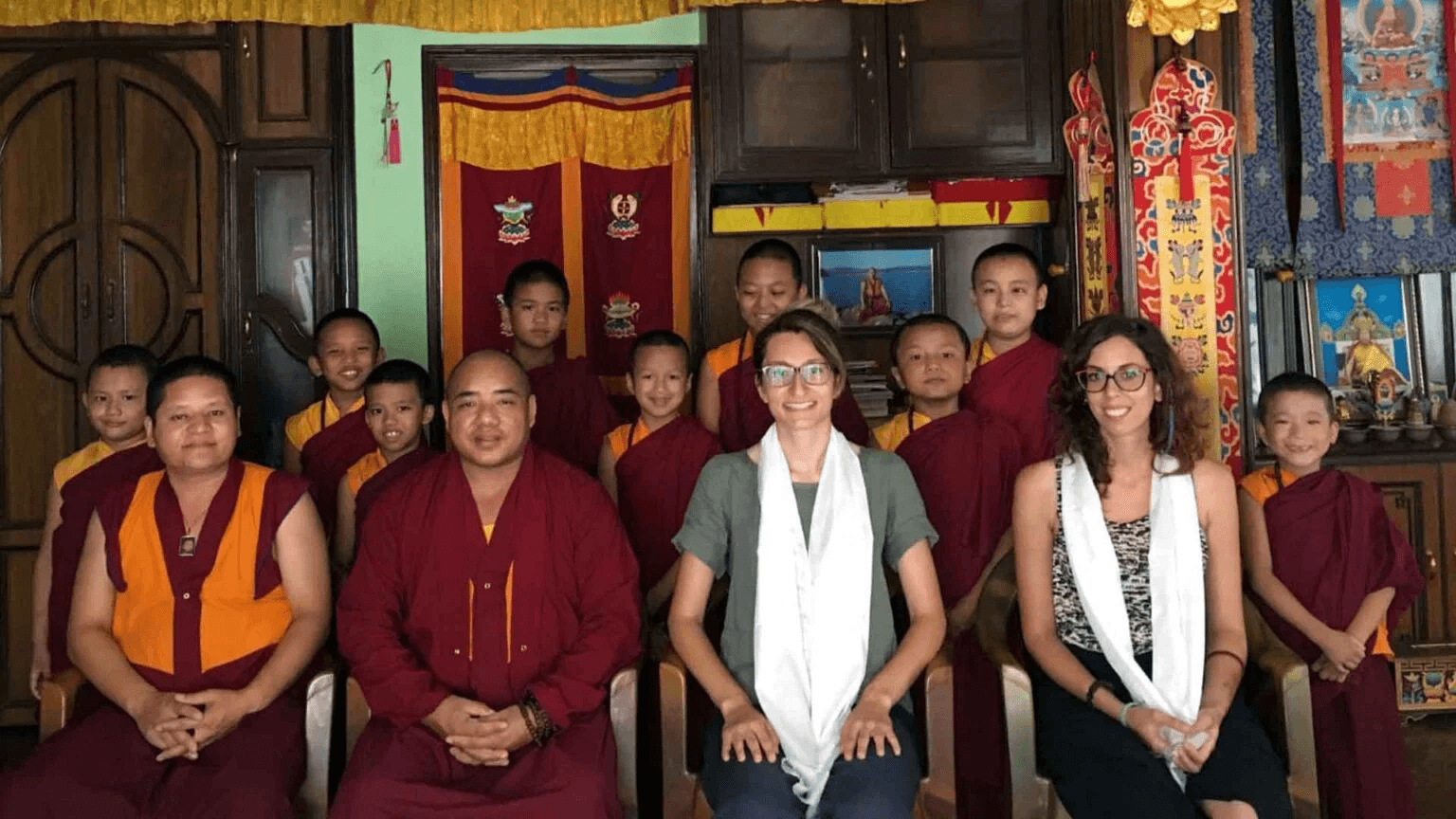
It's a good fit for gap year travelers, career-breakers, and language teachers after something different. It's also a good fit for anyone who has been curious about Buddhist monastic life and wants more than a day visit.
What do monastery English teachers do in Nepal?
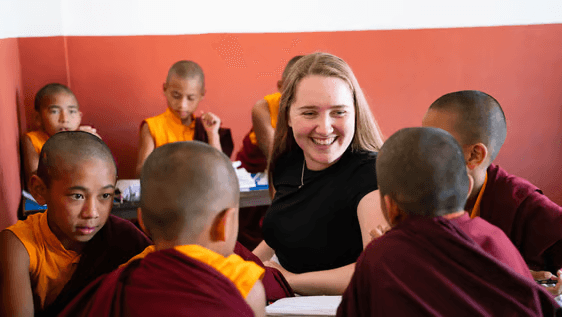
Your students are student monks, mostly boys aged 8 to 18, though some monasteries also house older students. Their days revolve around religious study, meditation, and ritual. English sits alongside all of that as a practical tool that matters — a way to communicate with donors, visitors, and eventually a wider world.
The English level varies by class. Volunteers are assigned to groups aged 9 and above, so students generally have some basic exposure and can follow simple instructions. What you're building on depends on which class you're placed with.
- Teach spoken English — conversation, pronunciation, sentence building
- Lead reading and writing exercises — short passages, letter writing
- Share your own culture, food and country to fuel conversational lessons
- Build your own lesson plans alongside the existing monastery curriculum
- Work with the local coordinator to adapt your approach as you go
What is a typical day like volunteering at a monastery?
- 5:00 AM
Morning Prayers
You don't have to participate, but most volunteers get up just to listen. It sets the tone for the day.
- 7:00 AM
Breakfast with the Monks
Rice, lentils, vegetables, tea. Simple food, served communally in the monastery kitchen.
- 9:00 – 12:00
Teaching Block
Two sessions of about 90 minutes each with a break in between. Your core teaching time.
- 12:00 PM
Lunch & Rest
Read, walk the grounds, or sit with a senior monk who wants to practice his own English.
- 2:00 – 3:30 PM
Afternoon Session (Optional)
A second session or one-on-one practice with students who want extra time. Your call.
- 4:00 PM
Free Time
Walk to a nearby village, visit a stupa, or watch the afternoon routine of a monastery unfold.
- 6:00 PM
Evening Meal & Prayers
The day closes the same way it opened — with the monastery's own rhythm.
Where do monastery volunteers stay in Nepal?
TravAction works with monasteries across Kathmandu, Pokhara, and the Himalayan region. Most volunteers are placed in Kathmandu or Pokhara — both are easy to get around and most monasteries sit close to Boudhanath, a UNESCO World Heritage Site and one of the largest Buddhist stupas in the world.
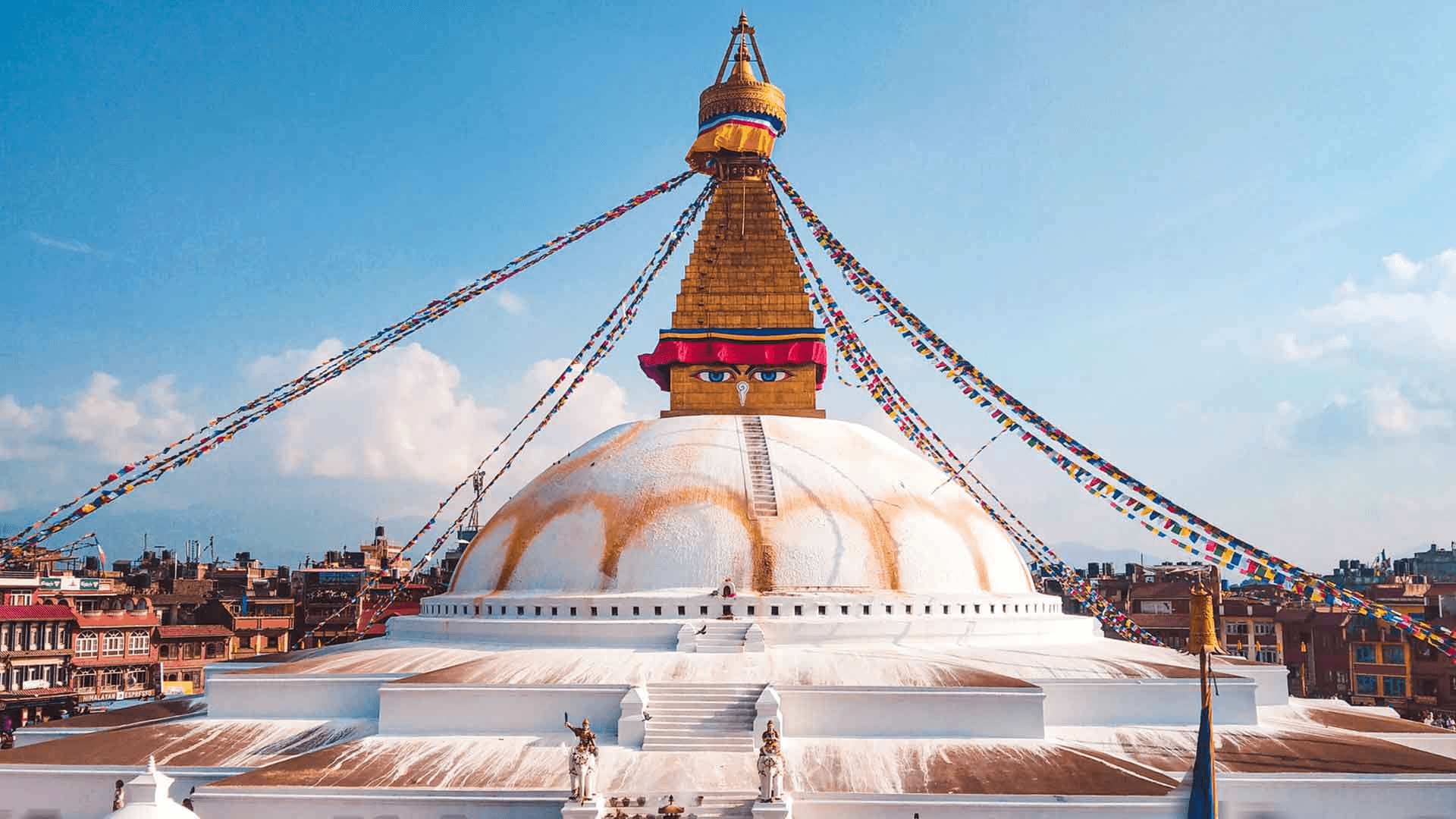
Kathmandu
Most popular placement. Close to Boudhanath Stupa. Great for first-time visitors to Nepal.
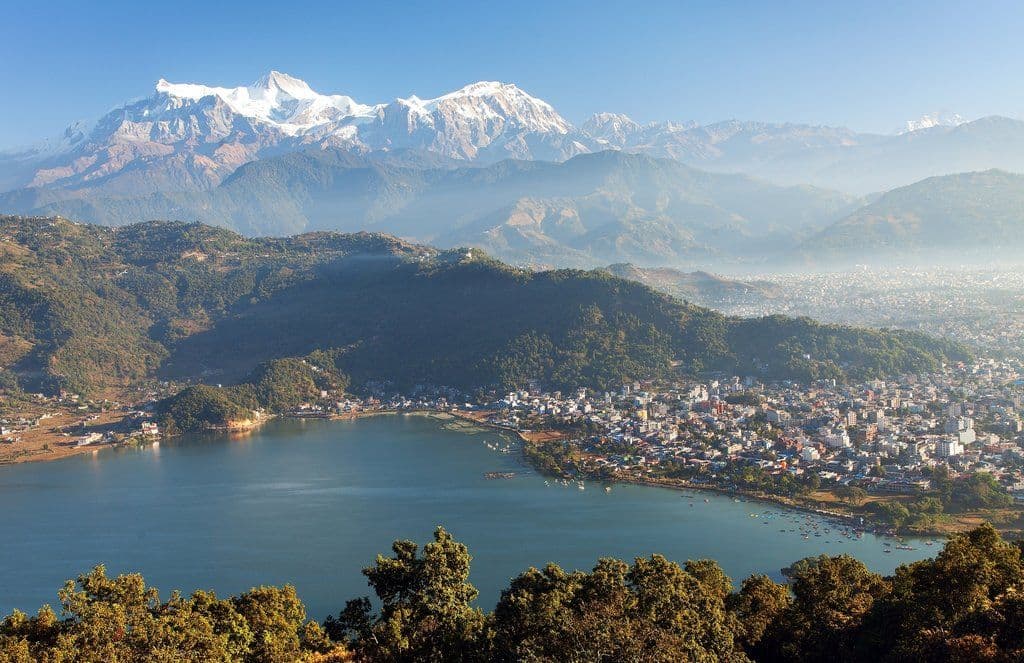
Pokhara
Mountain views, clean air, slower pace. Volunteers often say Pokhara made their whole experience.
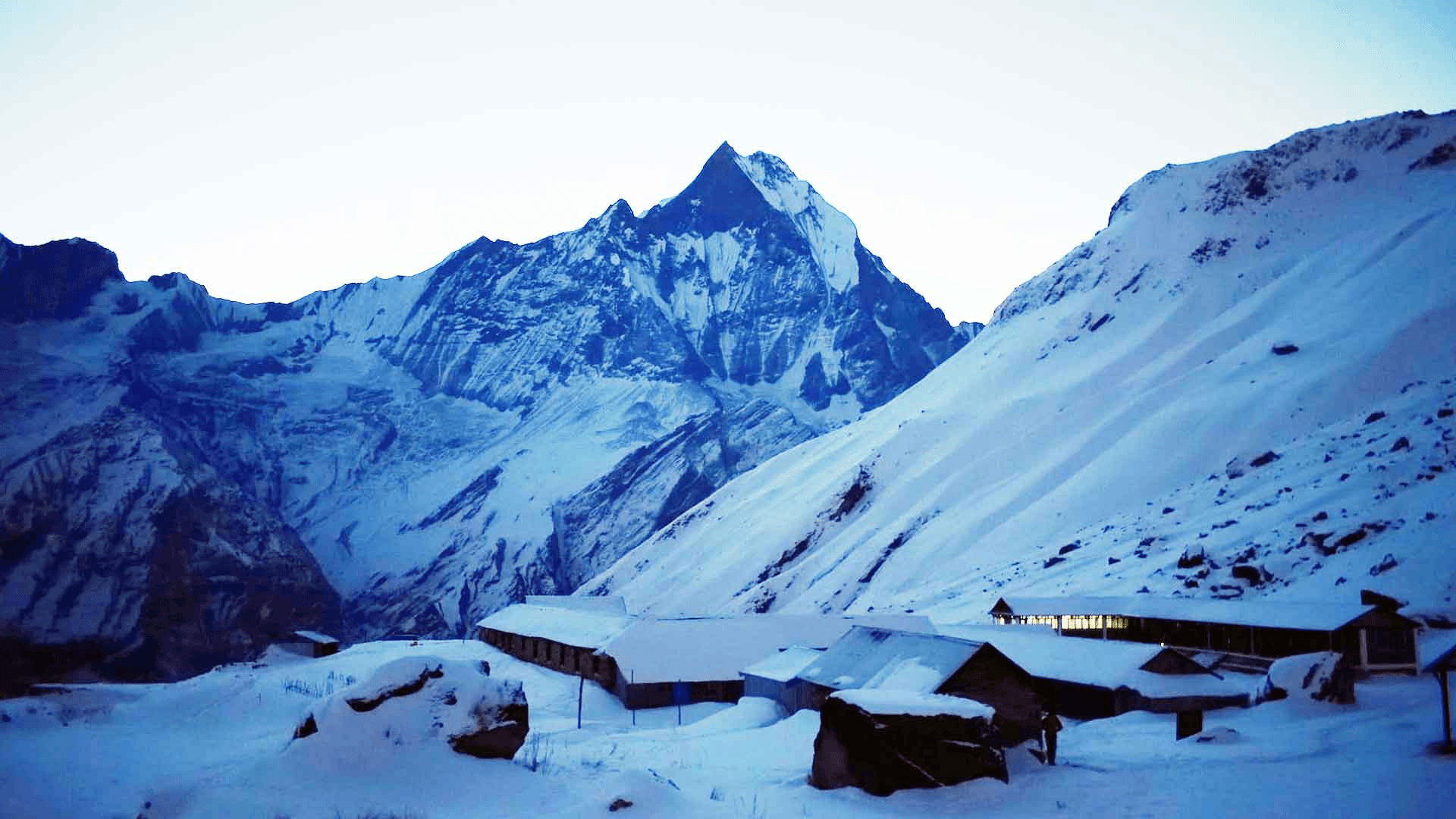
Himalayan Region
For those wanting total immersion. Requires flexibility and comfort with basic conditions.
What are the living conditions like?
You'll stay inside or directly beside the monastery compound. A private room, a bed, basic furniture, shared bathrooms. Three meals a day from the monastery kitchen. Electricity is reliable in most placements, less so in remote ones.
This isn't a guesthouse, and it's not supposed to be. Some volunteers find the simplicity calming after the first few days. Others find it hard, then get used to it around week two. We say this not to put you off but because it matters for whether this is the right choice for you.
What's included
Included
- Pre-arrival briefing & orientation
- Airport pickup & Kathmandu orientation day
- Accommodation within the monastery
- Full board (3 meals daily)
- Local coordinator support throughout
- Introduction to host teacher
- Certificate of service on completion
Not Included
- International flights
- Nepal visa fees
- Travel insurance
- Personal spending money
- Teaching materials (optional)
Compare Placements
Monastery placement vs. school placement
| Monastery teaching | School teaching | |
|---|---|---|
| Duration | 2 weeks | 4 weeks |
| Location | Kathmandu valley | Rural Nepal |
Frequently Asked Questions
- No. Respectful and curious, yes. Buddhist, no.
- It varies by class. Volunteers are placed with groups aged 9 and above, so students generally have some basic exposure and can follow simple instructions. Your coordinator will brief you before your first session.
- Yes. Most monasteries we work with welcome female volunteers. We brief you on any site-specific customs before you arrive.
- Nepal is a safe place to volunteer, and monasteries run on a clear, structured daily routine. Our coordinator is reachable throughout your stay. We've been placing volunteers at these sites since 2004.
- TravAction's monastery placement fee covers accommodation, meals, orientation, airport pickup, and on-the-ground coordination. International flights are not included. See our pricing page for a full breakdown.
- Day-to-day, it's about 3 to 4 hours of English teaching in the morning, shared meals with the monks, and free time in the afternoon. The work itself is straightforward — the adjustment is the environment. Living inside a working monastery is genuinely different from any other volunteer setting.
What our volunteers say
“Teaching in Kathmandu gave me a new perspective on service. The team made every step easy, and the children made every day unforgettable.”